Monday, August 29, 2022

Nintendo Lefty RX English promotional leaflet

A few weeks ago, when scanning Yahoo Auctions Japan for vintage Nintendo toys, my eyes spotted a Lefty RX G.T. Sport set. The set was in decent condition, but nothing I did not already have in this collection. Or so I thought, on first glance.

I have always had a soft spot for these 1972 toy racing cars. Nintendo turned their obvious disadvantage (it cannot steer to the right), into a unique selling point. So I pay extra attention when an auction of one of these scrolls by, and gave it a second look.

Something looked off and unfamiliar.

I quickly realised that included in the box, besides the standard black and white manual, was a leaflet I had not seen before. Enough reason to bid. Luckily I won the item for a reasonable amount.

When the package arrived at my place a few weeks later, and I opened the box, I was glad I had acquired it.

The document turned out to be a full-colour promotional leaflet, in English. A document I had never seen before.

Around this time (late 1960s to early 1970s), Nintendo was trying to expand their market abroad, mostly through foreign distributors. English language versions have been found for many of their products from this era, including the Ultra Hand, Love Tester, Challenge Dice, Ultra Machine and Ultra Scope. However, this was the first time I saw that a similar attempt was made for Lefty RX as well.


Monday, August 22, 2022

Nintendo Kyoto Souvenir Playing Cards (1950s)

This is a story about a beautiful set of vintage Nintendo playing cards, and dealing with a certain amount of disappointment.

In a previous post, I shared a document from the 1950s, called the Nintendo Playing Cards Report.

This document is both a company introduction and a product catalogue. It provides a comprehensive overview of all products offered by the company at the time; (mostly) playing cards, as the title suggests.

Of all the card sets shown in this document, one set in particular caught my attention: the Kyoto Souvenir Playing Cards (スーベニヤトランプ). This includes a photo of some aspect of Kyoto on each card, so over fifty different photos in total.

This set of cards intrigued me for a number of reasons.

Firstly, the cards look beautiful. Within Nintendo's product portfolio, these are some of the earliest examples of themed cards, that offer more than the standard card suits with a colourful back design. [Another early example are these Nintendo Takarazuka cards.]

Also, there is a strong link between Nintendo and the subject of Kyoto, as it is the company's hometown.

Furthermore, these cards provide a view of how Kyoto, and by extension Japan, presented itself to tourists at that time. They offer a window to that past, when tourism was still largely a domestic affair. Foreign visitors came to Japan only in small numbers, and most non-Japanese tourists in Japan consisted of US troops stationed in Japan following the occupation after Japan's defeat at the end of World War 2.

From the 1950s, the Japanese government did promote tourism to foreign nationals, as it brought in much needed foreign currency, and these cards fit that promotional effort.

Very recently, I managed to find two copies of this set. The first I ever saw, after more than twenty years of searching for vintage Nintendo items. Also the first to appear in collector circles. As you can image, this discovery made me very happy.

Even more fantastic (or so I thought initially), was the fact that they are unused, old stock. [Later it became clear that I celebrated too early, more on that at the end of this post.]

The boxes are in relatively good condition, although they are somewhat dusty. Not surprising really, given their age of around seventy years!

The front and back of the box contain nice drawings of scenes from Kyoto, as well a diamonds and clubs symbols.

Sunday, July 31, 2022

Former Nintendo HQ opens as Marufukuro hotel (and beforemario is present, in book form)

A few months ago, on April 1st 2022 to be exact, the former headquarters of Nintendo at Shomen-Dori in Kyoto opened as the Marufukuro Hotel, after extensive restoration and remodelling.

Recently, there was a nice surprise for me personally, which I will keep for the end of this post.

This building has played an important part in Nintendo's history. Although it wasn't the first building occupied by Nintendo, it is located on the spot where the company started, and served as headquarters for around a quarter of a century; from the moment it was erected in 1933 to the late 1950s. It also was the home for the Yamauchi family during this period.

The building was modern for its time, well designed and crafty built, with many nice details; signalling a company on the rise. It was commissioned by Sekiryo Yamauchi, Nintendo's second president. Hiroshi Yamauchi, Sekiryo's very successful successor and third president, also conduced his business from here during the first ten years of his reign.
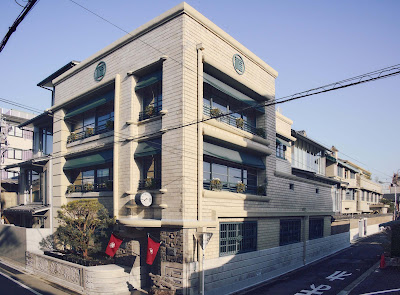

The Marufukuro Hotel in 2022

After Nintendo's center of power moved to newer offices in other areas of Kyoto, and the building was no longer used in any form in the company's daily operation, it was kept more or less in the state from its period of prominence.

During the last twenty years or so, it become a spot to visit, a place of pilgrimage of sorts, for Nintendo enthusiasts from across the world.

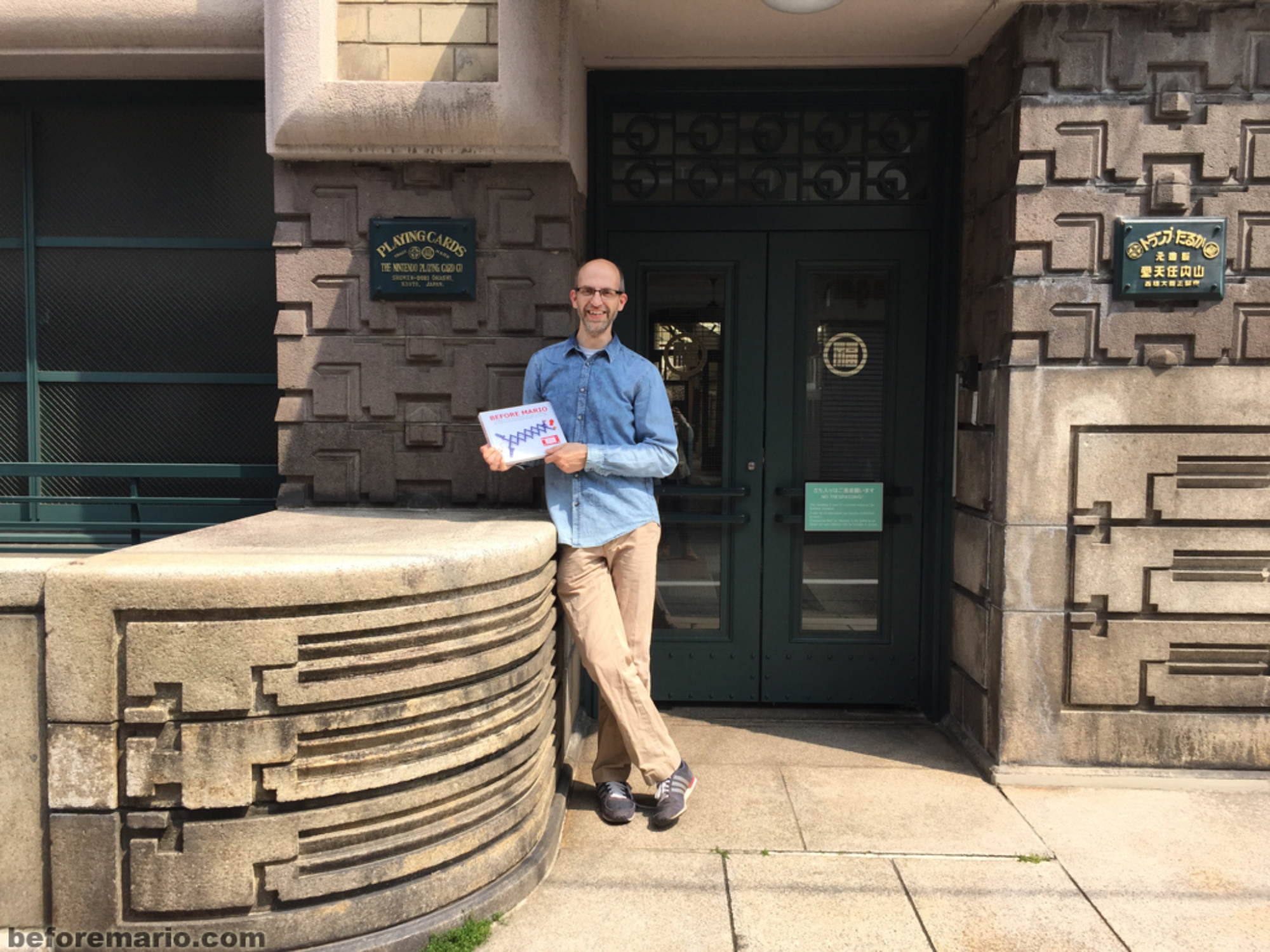
Back in 2015 I took a picture there with my just released Before Mario book, in front of the door that remained largely closed for decades. [More on that visit here.]

At the former Nintendo HQ in 2015

When comparing the current 2022 version of the building with its former state, a few things stand out.

Two large circular 'Marufuku' logos have been placed on the top of the front and side facade. Although they look like they have been there from the start, they are new additions. A clock was added above the front door, and sun screens above the windows.


At the former Nintendo HQ in 2015

The middle section has been build more high up. Originally this only contained some smaller, single-story rooms and a court yard.


At the former Nintendo HQ in 2015

Most prominently, a whole section was added to the left of the building. Originally housing a wooden structure from the early days of the company, this had remained a vacant lot since that structure was torn down around 2004.


At the former Nintendo HQ in 2015, the missing original building

Fast forward to 2022, where we find the building looking splendid. The old exterior has been cleaned and the building is extended with tastefully designed additions.

The biggest change, of course, is that the front door is now open. At least, open to all who book a room for the night.

Saturday, June 25, 2022

Nintendo Nagoya office opens in 1959

In the 1950s, Nintendo was expanding its operation, including a move of the headquarters to a new, larger production location. The Nintendo Playing Cards Report from the mid 1950s provides a good overview of the various locations in use at that time in Kyoto, as well as branch offices in Tokyo and Osaka. These branch offices supported the company's national sales and distribution network.

The magazine below introduces another new location.

The magazine is called Gangu Shoho (玩具商報), which translates to 'Toy Business Bulletin'.

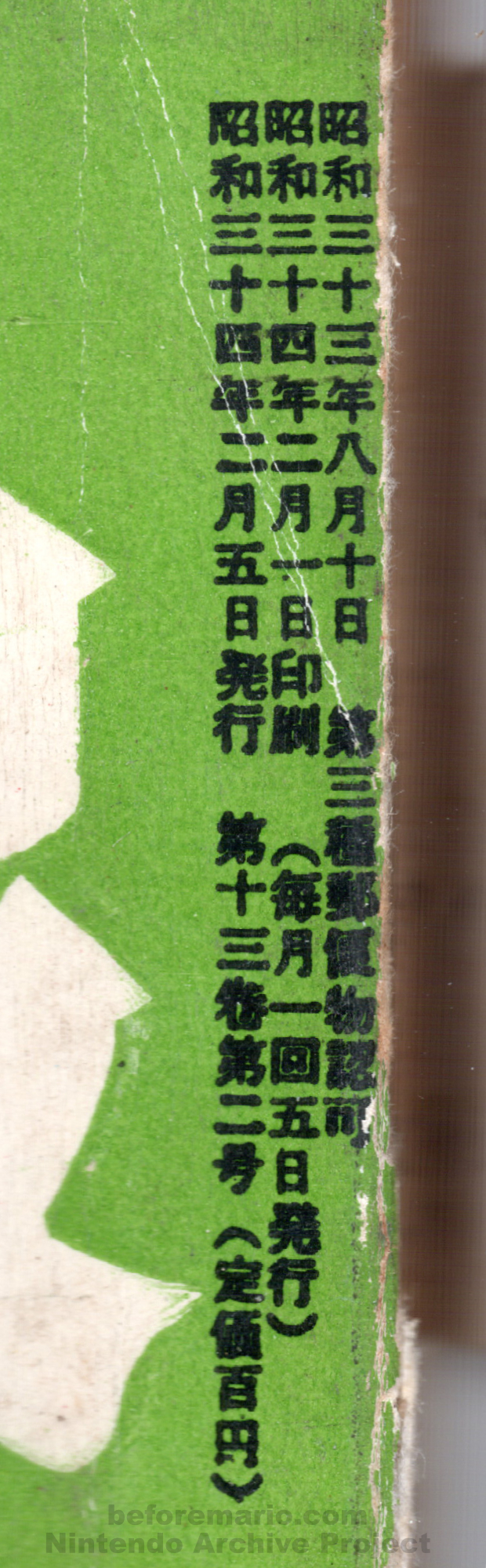
It is a monthly magazine, and this particular copy is number two from 1959. The issue date 'February 5th 1959' is printed on the top right corner, in the traditional top down notation (昭和三十四年二月五日). The magazine cost 100 yen.

The magazine is filled with trade news and ads by manufacturers and distributors of toys and games, as well as sweets. Basically, anything you are likely to find in the toy section of a department store, a toy store, or a dagashiya (駄菓子屋).

The news section includes a piece about Nintendo.

The headline reads "Nintendo Nagoya branch newly established".